

Best Content Workflow and Project Tools Compared points to Air for asset-centered lifecycle work, Asana, Monday.com, Wrike, Kissflow, Process Street, Cway, Cloud Campaign, and Planable for different workflow and approval needs. Pricing ranges from free tiers to listed plans such as Asana Starter at $10.99 per user monthly when billed annually.
- Air keeps assets, versions, feedback, and approvals together from intake through reuse.
- Monday.com has a free tier for up to two users, while paid plans have a three-seat minimum.
- Asana Starter costs $10.99 per user per month when billed annually.
- Cway supports approval chains with deadlines, reminders, and conditional logic.
- StreamWork offers unlimited external reviewers who don't need to log in.
What does content workflow software do, and how does it differ from project management software?
A workflow is the sequence of tasks required to finish a project. Workflow management streamlines recurring tasks, whereas project management coordinates unique initiatives with timelines and deliverables. Best Content Workflow and Project Tools Compared therefore starts with whether your work repeats or ends.
Content approval workflows cover review, revision, and approval before content goes live or goes to print. Creative review software is designed for that work, unlike general project platforms such as Asana, Monday.com, and ClickUp, which track tasks and deadlines but aren't designed for creative approvals at scale.
Recurring work often requires templates, routing, and separate tracking for each run. A process-tool approach defines the workflow once, launches it whenever work recurs, and tracks every run separately. Best Content Workflow and Project Tools Compared should distinguish those mechanics from a one-off project plan. Best Content Workflow and Project Tools Compared is a useful lens when a content team is deciding between task management and workflow automation.
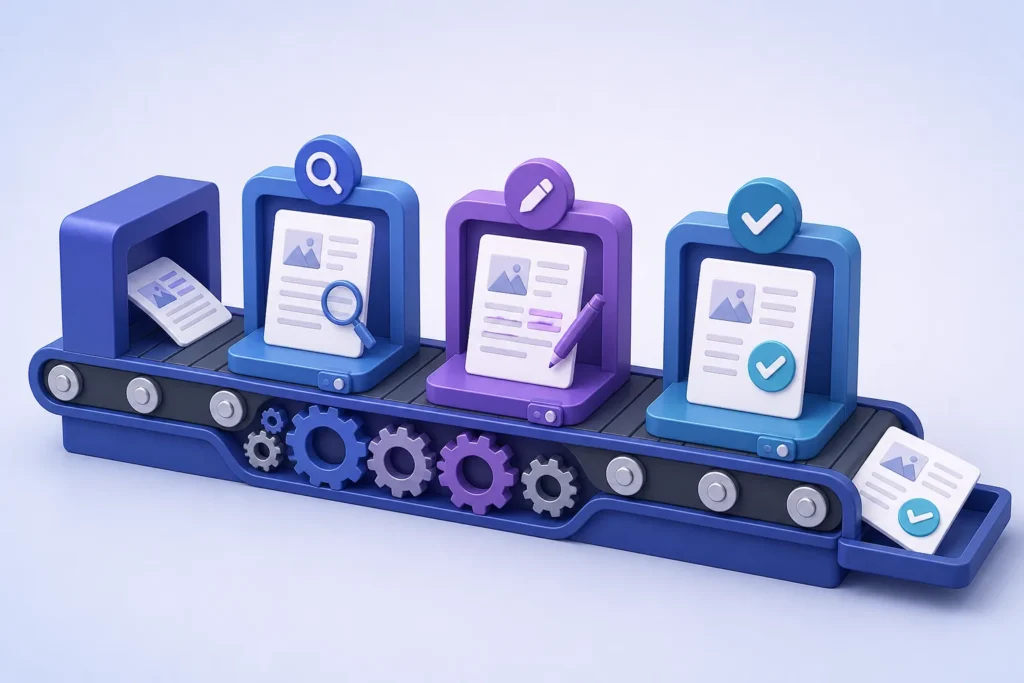

Which tools are the Best Content Workflow and Project Tools Compared across the full content lifecycle?
Asset-centered workflows can connect intake, planning, drafting, review, approval, publishing, and reuse. Air keeps assets, versions, feedback, and approvals together from intake through reuse. Best Content Workflow and Project Tools Compared is strongest when lifecycle coverage matters more than a simple task list.
Asana supports customizable Planning, Execution, and Review stages and review cycles for documents, designs, and deliverables. Wrike combines delegation, approval processes, performance tracking, approvals, and proofing. Monday.com turns forms and intake workflows into trackable work items.
Kissflow supports no-code or low-code business process automation, while Process Street uses checklists for repeatable workflows. Cflow supports no-code workflow customization and automation. Cway offers approval chains with deadlines, reminders, and conditional logic, plus a media center and post-approval sharing. Cloud Campaign and Planable support client review and approval steps. Best Content Workflow and Project Tools Compared does not establish tool-specific SEO keyword research, content briefs, search-performance feedback, or AI-agent features. Best Content Workflow and Project Tools Compared should therefore not be read as evidence of those capabilities.

How do the leading content workflow and project tools compare on collaboration, automation, asset management, reporting, and integrations?
Team collaboration ranges from shared files and real-time communication to mentions, attachments, proofing, and external review. StreamWork permits unlimited external reviewers without logins. Best Content Workflow and Project Tools Compared should assess whether feedback stays with the work rather than moving through email and chat.
Automation includes Monday.com rules, Cway reminders and status updates, conditional logic, and no-code workflow building. Air can attach image feedback to coordinates and video feedback to timestamps, while Cway supports side-by-side revision comparison and histories. StreamWork describes visual, time-stamped markup and version histories.
Reporting varies: ClickUp includes dashboards, Smartsheet offers reports and portfolio visibility, and project reports can track time, budget, resources, completed tasks, and team performance. Integrations include Slack, Google Drive, Office365, CRM platforms, Dropbox, Adobe Creative Cloud, and open APIs. Best Content Workflow and Project Tools Compared cannot establish direct CMS, social publishing, distribution, performance, engagement, lead, or revenue reporting for these tools. Best Content Workflow and Project Tools Compared should treat those areas as unknown.
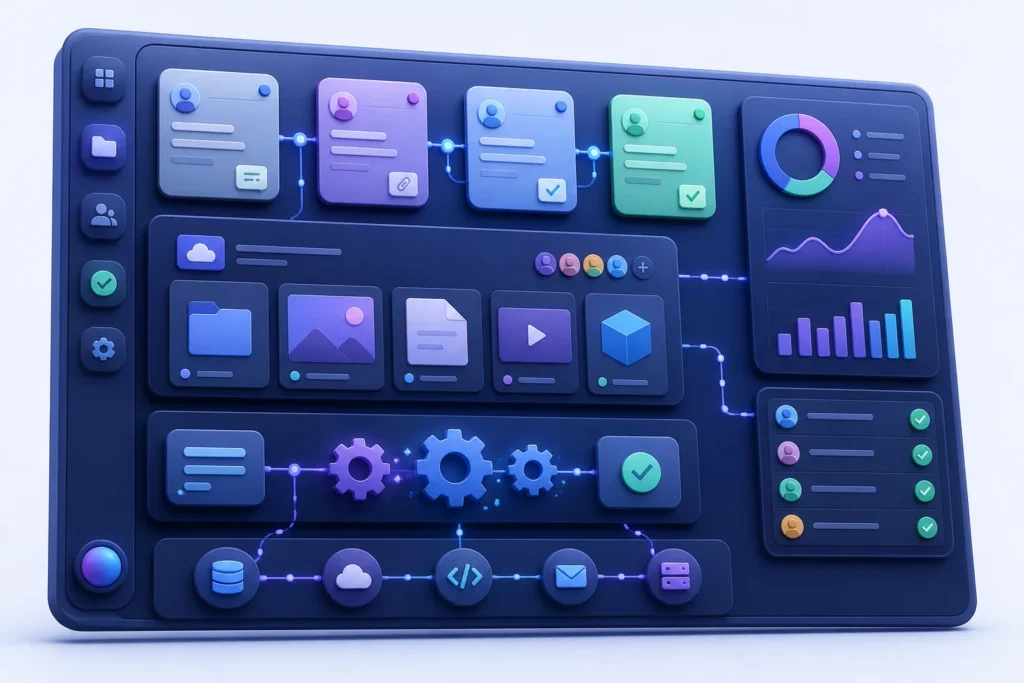
What are the pricing plans, user limits, and key feature restrictions of the leading tools?
Pricing models include per-seat, fixed seat groups, per-user, unlimited-user, usage-credit, and quote-based approaches. Best Content Workflow and Project Tools Compared should compare the seat requirement and the feature tier, not only the headline price.
The table below compares the available prices, limits, and restrictions. Air uses unlimited seats with monthly credits shared across storage, image editing, and video creation. Monday.com has a free tier for two users, paid plans start with three seats, and Basic is listed at $9 per seat monthly when billed annually. Asana Starter is $10.99 per user monthly when billed annually, while Enterprise is quote-based. ProofHub Essential is $45 monthly for unlimited users, up to projects, and 15GB of storage when billed annually.
Nifty lists $7, $10, and $16 per user monthly for Starter, Pro, and Business on annual billing. Wrike Team is $10 per user monthly for 2–15 users on annual billing. Other listed prices include Notion AI at $5 per user monthly with the stated nonprofit discount, Cloud Campaign from $49 to $299 with unlimited users, Loomly from $49 yearly or $65 monthly, SocialPilot at $100 monthly, Sendible from $199 monthly, Vista Social at $149 monthly, Agorapulse at $79–$149 per user monthly, and a free ONES.com plan for seats. The ledger provides no comparable pricing, limits, or restrictions for every tool named here. Best Content Workflow and Project Tools Compared should verify current rates and align automation, integrations, governance, and seats with the selected tier. Best Content Workflow and Project Tools Compared is a pricing comparison, not a promise that rates remain unchanged.
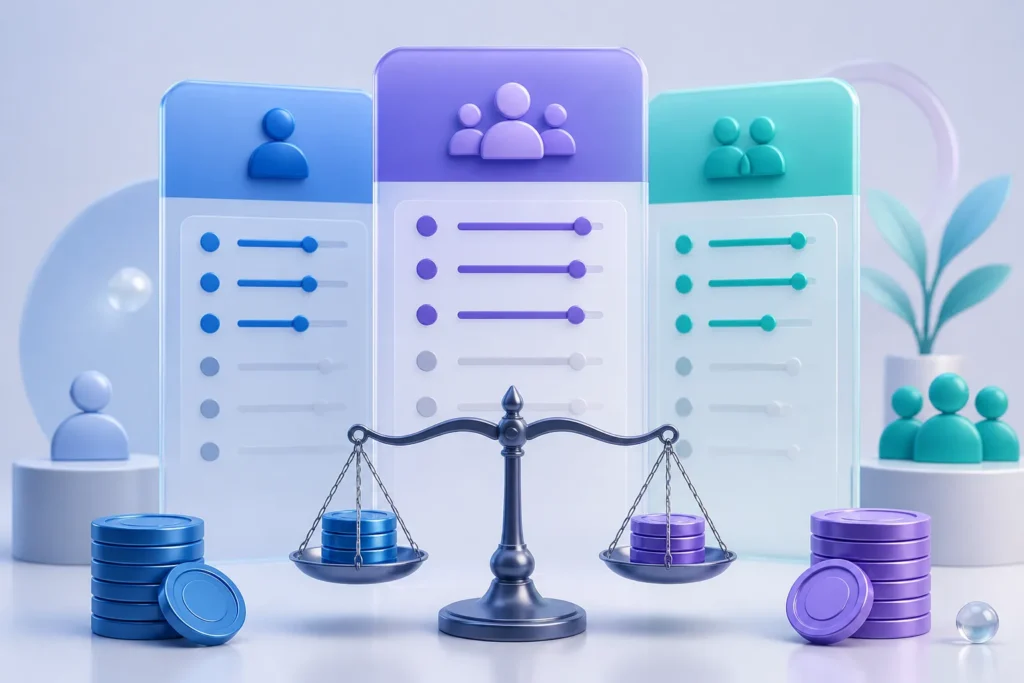
How should a team choose a tool based on its size, content volume, workflow complexity, and existing software?
Choose workflow software by first listing project planning, task management, reporting, collaboration, and stakeholder-management needs. Best Content Workflow and Project Tools Compared should then match the tool to content volume, workflow complexity, team size, and existing software.
- Choose Kissflow for structured workflows, Monday.com for visual collaboration, or Process Street for recurring checklists and standard operating procedures.
- Use asset-centered proofing when more stakeholders are involved in review and traditional feedback methods no longer fit.
- Compare seat economics with the expected team size; one source recommends a $100-to-$300 monthly stack for a small team of two to ten people.
- Match the work type: ClickUp offers workload planning, Asana supports visual timelines and integrations, Trello is described as suitable for simple projects, and Notion is characterized as a knowledge base with task tracking rather than a project execution engine.
ClickUp also includes dashboards and project views, while project reports can cover resources and team performance. Best Content Workflow and Project Tools Compared should not assume every tool covers capacity planning. Best Content Workflow and Project Tools Compared works best as a fit test against your actual workflow.
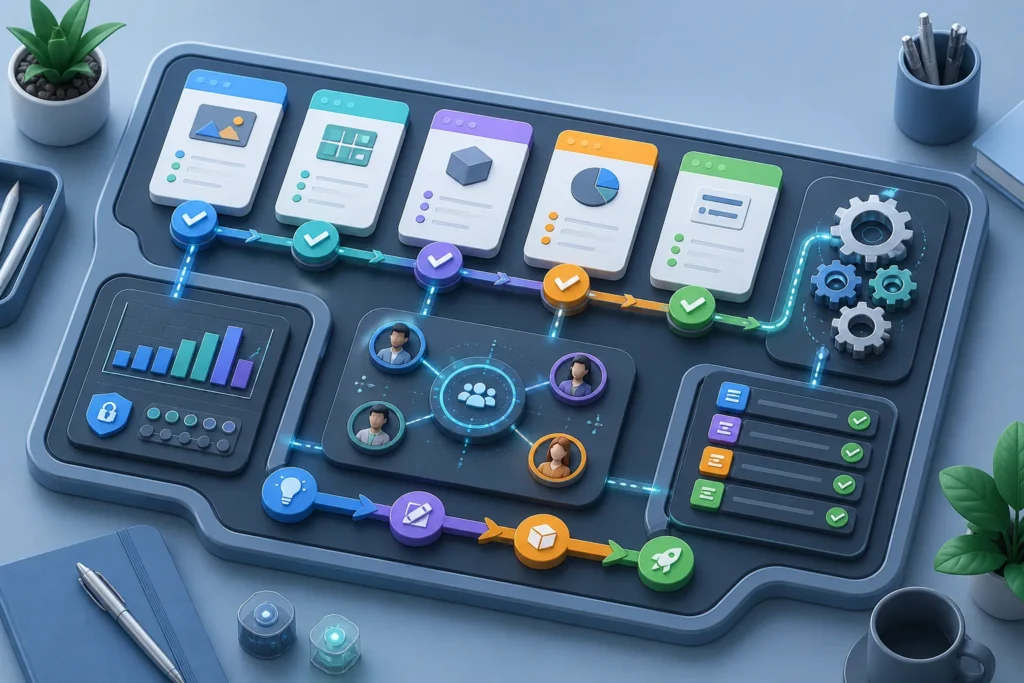

What trade-offs or limitations should teams consider before choosing a content workflow or project tool?
Setup effort and learning curves can outweigh feature breadth for a small team. Kissflow permissions may require substantial effort, Nintex customization may need technical expertise, Workfront can be difficult for new users, Nifty has a steep learning curve, and Wrike may require training. Best Content Workflow and Project Tools Compared should make onboarding part of the evaluation.
ClickUp's breadth can require substantial configuration, while Airtable's flexibility can produce a sprawling application understood by only one person. Customization helps unusual workflows, but maintainability requires documented ownership and repeatable administration; the ledger doesn't provide a comparative maintainability score.
General project tools may force recurring teams to copy templates, stitch together automation rules, and track copied work separately. Governance evidence includes higher-tier governance capabilities, role-based access, permissions, version histories, and audit trails that record who changed what and when. Best Content Workflow and Project Tools Compared should examine those controls before rollout. Best Content Workflow and Project Tools Compared cannot provide vendor-lock-in measurements or comparable security and compliance certifications for the leading tools.
How can a team evaluate and roll out a shortlisted tool using a pilot workflow and measurable success criteria?
A practical pilot starts with the primary workflow bottleneck, measures the savings, and then addresses secondary slowdowns. Best Content Workflow and Project Tools Compared should be tested against a real Content Systems Desk workflow, not a demonstration task.
- Use the same content workflow in each shortlisted tool and measure setup time, manual handoffs removed, reporting quality, permission behavior, and automation traceability.
- Map real roles, deadlines, review stages, approvals, asset versions, and publishing handoffs; arrange tasks chronologically and consult the relevant people.
- Assign reusable workflow roles rather than naming individual people, then test the completed workflow with the project team.
- Refine the process before automating the final version, and include goals, current-workflow assessment, configuration, training, and effectiveness monitoring in rollout.
Use a free trial for hands-on evaluation before deciding. Best Content Workflow and Project Tools Compared should support accurate, useful, original, and brand-appropriate AI-assisted content through professional editing and human expertise. The ledger provides no editing rates, turnaround times, or AI-detection-tool limits. Best Content Workflow and Project Tools Compared should leave those measures for a separate procurement check.

| Product | Review/approval capability |
|---|---|
| Air | Air keeps assets, versions, feedback, and approvals together in a visual… |
| ProofHub | ProofHub includes online proofing to review and share feedback on digital… |
| Wrike | Wrike supports approvals and proofing, which the source identifies as useful… |
| Asana | Asana supports review cycles for documents, designs, and deliverables through… |
| Cway | Cway supports approval chains with deadlines, reminders, and conditional logic. |
| Cloud Campaign | Cloud Campaign lets clients approve a whole calendar or individual posts, leave… |
| Product | Pricing statement |
|---|---|
| Monday.com | Monday.com has a free tier for up to two users; paid plans have a three-seat… |
| Asana | Asana's Starter plan costs $10.99 per user per month when billed annually, and… |
| ProofHub | ProofHub's Essential plan costs $45 per month for unlimited users, up to 40… |
| Wrike | Wrike's Team plan costs $10 per user per month for 2–15 users, billed annually. |
| Nifty | Nifty’s listed annual-billing prices are $7 per user per month for Starter, $10… |
| Tool | Users or seat limit | Price or restriction | Evidence key |
|---|---|---|---|
| Air | Unlimited seats; usage measured in monthly credits | Credits shared across storage, image editing, and video creation | c_0027 |
| Monday.com | Free up to users; paid plans have a 3-seat minimum | Basic starts at $9 per seat/month billed annually | c_0028 |
| Asana | Personal free up to team members | Starter $10.99/user/month billed annually; Enterprise quote-based | c_0029 |
| Nifty | Starter $7, Pro $10, Business $16 per user/month billed annually | Listed prices are annual-billing rates | c_0036 |
| ProofHub | Unlimited users; up to projects; 15GB storage on Essential | $45/month billed annually | c_0046 |
| Wrike | Team plan for 2–15 users | $10/user/month billed annually | c_0047 |
| ClickUp | Free-plan limits are described by feature restrictions | Advanced workload management and enhanced time tracking are absent from the free plan | c_0038 |
| Notion AI | Per-user pricing | $5/user/month with the stated nonprofit discount | c_0059 |
| Cloud Campaign | Unlimited users | $49 Freelancer to $299 Agency; approvals on all plans | c_0100 |
| Loomly | Three-user cap on Starter; reviewers count toward the cap | $65 monthly or $49 yearly | c_0103 |
| SocialPilot | 25 accounts and users on Premium; reviewers count as users | $100/month for Premium client approvals | c_0104 |
| Sendible | Unlimited users on all plans | Approval workflows start on Premium at $199/month | c_0105 |
| Vista Social | Approval workflows on Advanced | $149/month; X is a paid add-on | c_0106 |
| Agorapulse | Client reviewers count as users | $79–$149 per user/month on paid plans with annual billing | c_0107 |
| StreamWork | Unlimited external reviewers without login | Price not provided in the ledger | c_0140 |
| ONES.com | Free plan for seats | Price and restrictions beyond the free plan are not provided | c_0070 |
Key Takeaways
- Separate recurring workflow management from one-off project management before choosing a platform.
- Prioritize asset-centered proofing when review volume and stakeholder count have outgrown ordinary task comments.
- Compare seat economics, automation limits, governance, and integrations together rather than judging price alone.
- Pilot each shortlisted tool with the same real content workflow and measurable success criteria.
- Treat SEO research, AI agents, direct CMS publishing, and content-performance reporting as unknown unless separately verified.
Frequently Asked Questions
What is the difference between workflow management and project management?
Workflow management software handles recurring sequences of tasks, while project management coordinates unique initiatives with timelines and deliverables.
Which tool is best for creative content workflows?
Air keeps assets, versions, feedback, and approvals together from intake through reuse.
Does Monday.com have a free plan?
Yes. Monday.com has a free tier for up to two users, while paid plans have a three-seat minimum.
